
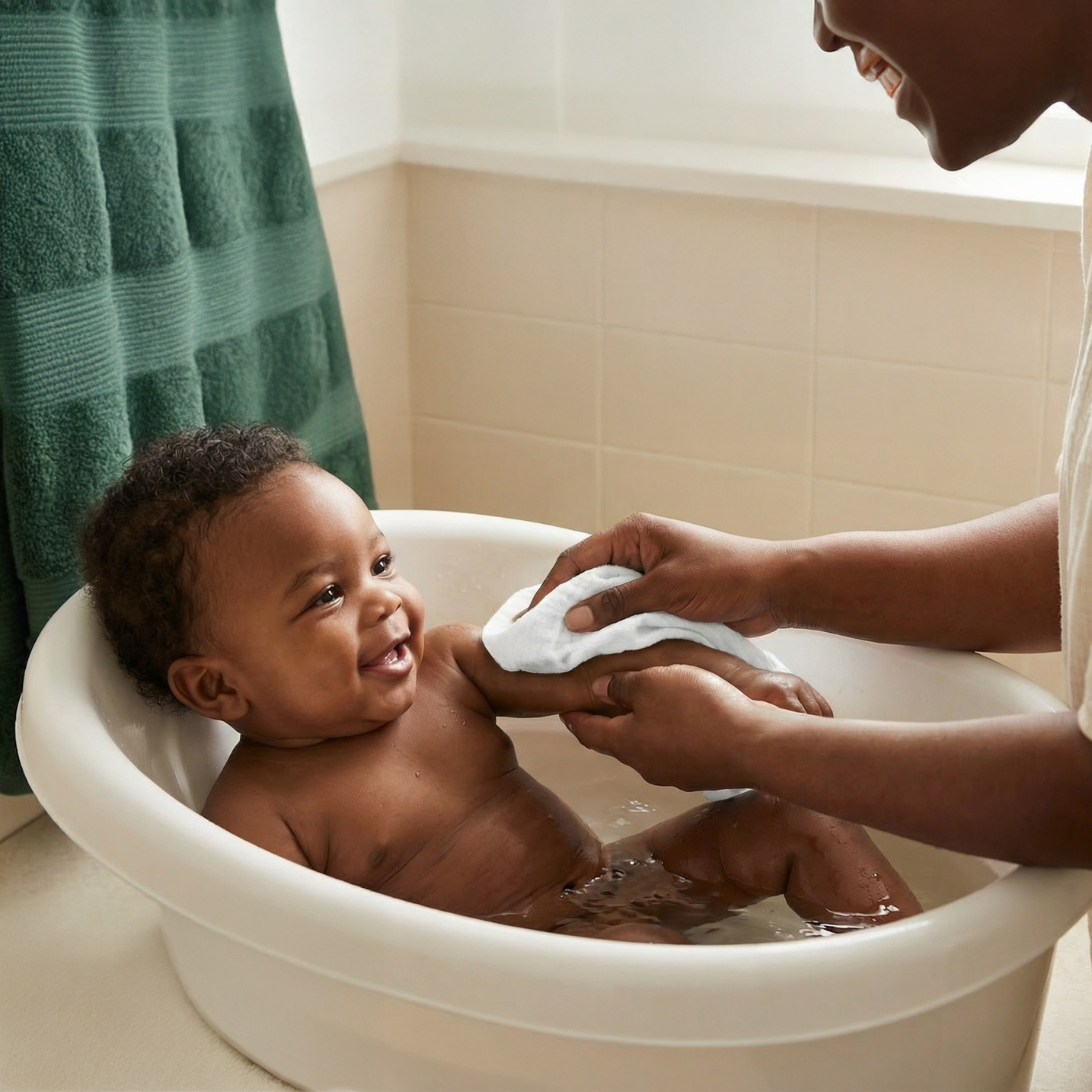
When to wait, what you actually need, and how to make those first warm-water minutes feel calm — for the baby, and for you.
Wait at least 24 hours after birth (longer is better) before your baby's first full bath. Until the umbilical cord stump falls off — usually one to three weeks — stick to gentle sponge baths with a soft muslin cloth and warm water. Once the stump is gone and the area is healed, you can move to short, shallow tub baths two or three times a week. Newborns don't need daily baths, scented products, or a long routine. Keep it simple, keep it warm, and keep it brief.
Why You Don't Need to Rush the First Bath
Babies are born coated in a creamy white substance called vernix caseosa — a natural moisturizer that protects their skin in the womb and continues to do useful work in the days after birth. It's mildly antimicrobial, helps regulate temperature, and softens the skin's transition to the outside world. The World Health Organization now recommends delaying the first bath for at least 24 hours, and many hospitals will wait longer if parents request it.
There's no medical reason to wash a healthy newborn quickly. Once you're home, you've got time. The first real bath can wait until day five, day seven, or whenever it feels right.
Sponge Baths: The First Few Weeks
Until the umbilical cord stump dries up and falls off, the area needs to stay clean and dry — which means no submerging your baby in water yet. Sponge baths cover the same ground without putting the cord at risk.
What you'll need
- A warm, draft-free room (around 75°F / 24°C is comfortable for a naked baby).
- A small bowl of warm water — about 100°F / 38°C, the temperature of a comfortable bath for you.
- Two soft muslin washcloths: one for the face, one for the body.
- A clean towel laid out for afterwards.
- A fresh diaper and a set of clothes within arm's reach.
The sequence
Lay your baby on a soft towel on a flat, safe surface. Keep them mostly covered with a second towel and uncover only the section you're cleaning. Start with the face: a damp (not soapy) cloth for the eyes — wiping from inner corner outward — then the rest of the face, behind the ears, and the neck folds.
Move down: chest, arms, hands. Then legs, feet, and finally the diaper area, which you wash last. Pay attention to the natural folds — under the chin, behind the knees, in the creases of the thighs — where milk, sweat, and lint tend to gather. Rinse with a fresh damp cloth, pat dry thoroughly (especially in those folds), and dress in a warm, soft outfit.
The whole process should take five to seven minutes. Babies lose heat fast.
The First Tub Bath
Once the cord has fallen off and the belly button is fully healed (usually one to three weeks in), you can move to a proper bath. The first one often feels like a tiny milestone — and it doesn't need to be elaborate.
Setting up
Use a small infant tub or basin in a warm bathroom. Fill it with about two to three inches of warm water — enough to support your baby's body but not enough to cover their chest when laid back. Test the water with the inside of your wrist or elbow, where the skin is more sensitive than your hand. It should feel comfortably warm, never hot.
Have everything you'll need at arm's reach before the baby goes near the water: a soft cloth, a small amount of cleanser if you're using any, a hooded towel, a clean diaper, and clothes. Once you start, you don't put your baby down to grab something forgotten.
How to hold your baby in the bath
Support the back of the head and neck with one hand or forearm — the back of their head should rest in the crook of your elbow, with that hand wrapping under their far armpit so you have a firm grip. Your other hand is free to gently pour water over their body and wash. Always keep one hand on your baby in the water, every second.
Wash, rinse, lift
Use the same order you would for a sponge bath: face first with plain water, then body, then bottom. A muslin cloth is ideal here — soft enough for newborn skin, big enough to drape over the chest to keep them warm in the air, and quick to rinse. If you're using a cleanser, use just a drop, work it gently, and rinse thoroughly. Most newborns don't need shampoo at all in the early weeks; warm water alone is plenty.
Aim for five to ten minutes total. When you lift your baby out, wrap them straight into a warm towel and dry them in the same order you washed — face, body, folds, bottom — paying particular attention to the creases.
Our muslin washcloths and hooded towels are made from 100% OEKO-TEX certified organic cotton — soft enough for the most delicate newborn skin, absorbent enough to do the actual job, and pre-washed so they're already ready when you need them.
Shop bath essentialsWhat to Skip
Most of what's marketed for baby bath time is not necessary, and some of it actively isn't great for newborn skin. A short list of things you can confidently leave off the registry.
- Heavily scented products. Fragrance compounds are one of the most common causes of newborn skin irritation. "Unscented" or "fragrance-free" is a useful label — "naturally scented" usually isn't.
- Antibacterial washes. Babies don't need them, and they can disrupt the developing skin microbiome.
- Baby powder, especially talc-based. Inhalation risks plus no clear benefit. If you want help with chafing, a thin layer of plain petroleum jelly or zinc cream is enough.
- Bath seats and bath rings for newborns. Designed for older babies who can sit independently. They're not safety devices and shouldn't replace your hands.
- Long routines. The "splashy half-hour bath" is a toddler thing. Newborn baths should be brief, warm, and unfussy.
After the Bath: Skin and Lotion
Pat — never rub — your baby dry with a soft towel, paying attention to all the folds. If their skin is on the dry side (very common in the first couple of weeks as the post-womb shedding finishes), apply a small amount of plain, fragrance-free baby lotion or balm right after toweling off, while the skin is still slightly damp. This locks moisture in.
Avoid applying lotion to the face if your baby has any rash or milia — most newborn skin issues resolve on their own and don't benefit from being covered.
If Your Baby Hates the Bath
Some newborns love water from day one. Many others scream their way through the first several baths and gradually warm up over the course of weeks. If your baby is in the second camp, a few small changes that often help:
- Try a smaller container — a basin instead of a tub can feel more contained.
- Lower the water level so they don't feel exposed.
- Drape a warm muslin cloth over their chest while you wash; the slight pressure mimics a swaddle.
- Try a different time of day — overtired babies bathe badly.
- Get in the tub with them. Skin-to-skin contact in warm water is calming for most newborns and makes the experience feel less like a procedure.
If they still hate it, it's fine to keep baths brief and infrequent for now. Sponge cleaning the diaper area and folds daily covers what hygiene actually requires.
Frequently Asked Questions
How warm should the water be?
Around 100°F / 38°C — about the temperature of a warm (not hot) bath for an adult. Test with the inside of your wrist or elbow before your baby goes in. Many parents like a small bath thermometer for the first month or two; after that you'll know by feel.
Should I use soap on a newborn?
Sparingly, if at all, in the first weeks. Plain warm water is enough for most of the body. If you do use a cleanser, look for fragrance-free, dye-free, sulfate-free formulas labeled for newborn use — and use a tiny amount.
What about washing baby's hair?
You can run a damp cloth over the head as part of the bath — no shampoo needed for newborns. If your baby develops cradle cap (yellowish, scaly patches), gentle brushing during a bath plus a small amount of mild baby shampoo once or twice a week usually clears it.
What time of day is best?
Whatever time fits your day and your baby's mood. Many families find a bath in the early evening becomes a nice signal that night is approaching, but plenty of others bathe in the morning or midday. Avoid bathing right after a feed (spit-up risk) or when your baby is hungry, overtired, or distressed.
Is it okay if my baby cries the whole time?
Yes — it's not unusual for the first few baths, and most babies adjust within a few weeks. Keep the bath short, the room warm, and the handling confident. Confidence in your hands often does more to calm a baby than any technique.
How often should I bathe my baby?
Two to three baths a week is plenty in the first year. The diaper area gets cleaned at every change, and the rest of the body simply doesn't get dirty enough to need daily washing. Over-bathing is one of the most common causes of dry, irritated newborn skin.
One Last Thing
The first bath is a moment many parents remember vividly — the slick warmth of a tiny body, the wide-eyed gaze, the feeling of doing something both ordinary and enormous. There's no version of it you have to perform. Warm water, soft cloth, steady hands. Everything else is preference.
For more on outfitting the first weeks, see our newborn essentials checklist and our complete guide to swaddling.
All Mère & Moi products are made from 100% OEKO-TEX certified cotton muslin — designed to be gentle on newborn skin and genuinely useful from day one.
Browse all products